|
|||||||||||||||
| Article by Sue Comont, based on lecture notes from Rushden Boot and Shoe School 1935 - 1936 and 1948 - 1950 | |||||||||||||||
|
Shoemaking - Clicking
|
|||||||||||||||
|
|||||||||||||||
|
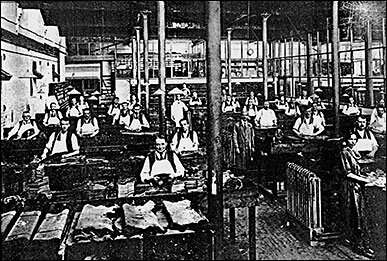
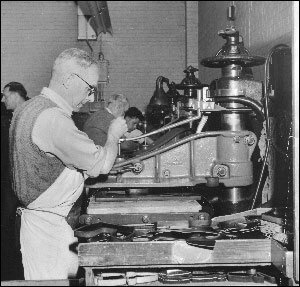
Shoes are made up of a number of different pieces of leather or other material sewn or otherwise fastened together and shaped on a last to fit the foot. Clicking is the term for cutting the leather into the pieces required for making the shoes. If the boot or shoe is to fit the last properly then everything must be cut true to the pattern.
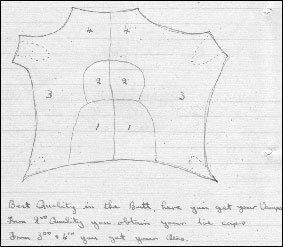
The cap of a boot or shoe is usually cut out of the best part of the skin. The front is also cut from the best leather while other parts can be cut from poorer quality skin. Tongues need to be of light, pliable leather. The clicker needs to have an understanding of the lines of tightness and stretch of a hide in order to cut the material correctly so that the end boot or shoe does not become misshapen.
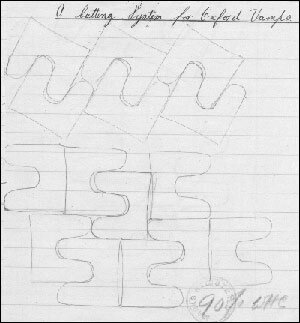
With a large hide the clicker can work a system for cutting patterns but with a smaller skin he must use his judgement in the pattern layout so they are all cut tight to the toe. Simple rules for systems are:
Factors that determine the number of times a system can be applied include:
A good system on one type of leather may not work on another.
There are several advantages to this:
Shoe parts are coloured to show the size of the end shoe. This is usually carried out in the Clicking Room and is done in one of three ways:
All marks should be made on parts that are lasted in or seamed so they are not visible on the finished shoe. The colour scheme used is as follows: Size 6 = yellow Size 7 = red Size 8 = white Size 9 = blue Size 10 = green Size 11 = brown Half sizes are shown either by two colours or two marks of one colour eg two red marks would indicate size 7½. |
|||||||||||||||
|